
Think Brand Identity Is Just Logos and Colours? Think Again
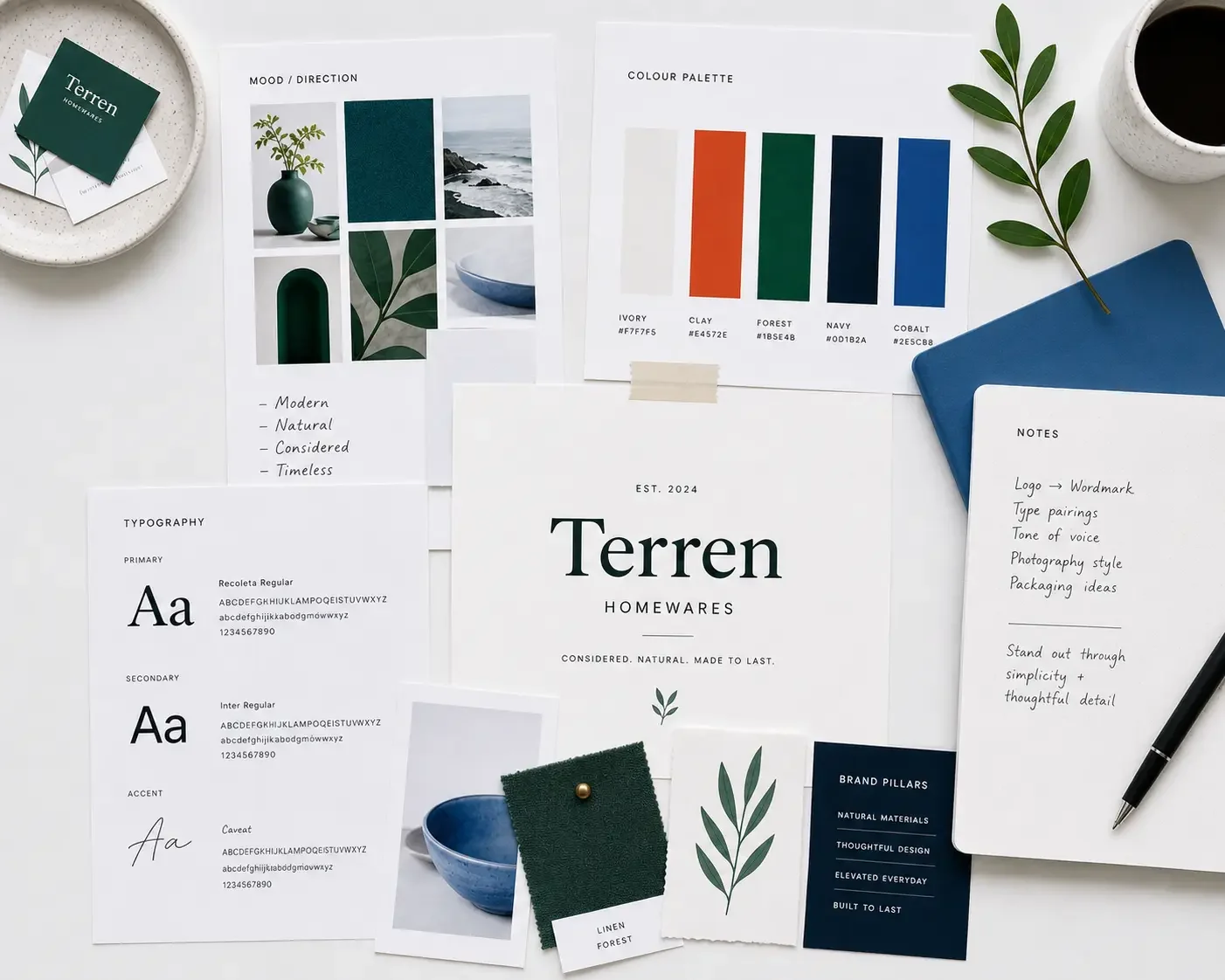
There is a version of brand identity that gets sold to small business owners every day. It comes as a logo, a colour palette, and - if you're lucky - a font or two, all packaged into a PDF and called a brand. It looks the part. It might even be well-designed. But the truth is – it is not a brand identity. Not in a strategic sense!
This misconception is not just frustrating, it’s a costly mistake that sees businesses invest in design before they even have a strategy. Only after the fact, do they wonder why things don’t feel cohesive, why their marketing doesn’t create impact, and why customers cannot understand what they do or articulate what makes them different from competitors.
If you are building or rebuilding your brand, this article will clarify what brand identity actually involves, and why getting it right will have a long-term positive effect on your business.
Why Many Businesses Misunderstand Brand Identity
Some of the most visible outputs of branding work are visual, so most business owners think that’s what they are buying. Of course, it doesn’t help that many providers, including a significant portion of freelance and template-driven designers, reinforce this belief by delivering exactly that: visuals without strategy.
"The result is a brand that looks like a brand but does not function like one."
It cannot guide consistent communication. It does not help customers understand why they should choose you over competitors. And it gives your marketing team - or you, if you’re wearing that hat - nothing solid to build from.

What Is Brand Identity, Really?
Brand identity is the complete system through which a business expresses who it is, what it stands for, and why it matters, consistently, across every touchpoint.
Sure - a brand identity includes visual elements. But it is primarily a strategic asset built on decisions about positioning, promise, personality, and voice. The visuals are only the final expression of that thinking, not a substitute for it.
Every effective brand identity begins with a question that has nothing to do with design:
What is the positioning of this business?
Until that question is answered, any design work is decorative at best and misleading at worst.
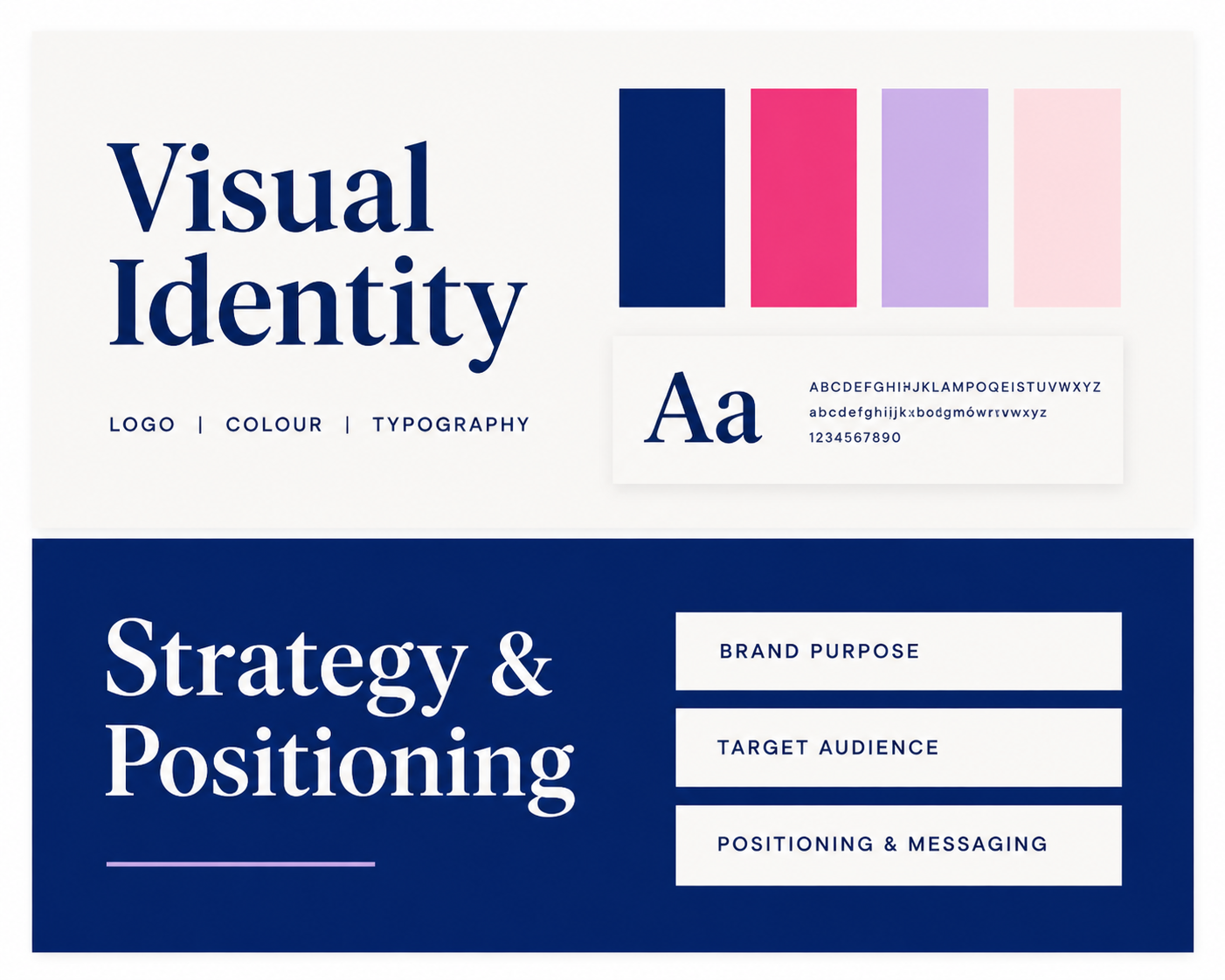
Brand Strategy: The Foundation Most Businesses Skip
Brand strategy is the set of decisions that define how a business is positioned in the market and experienced by its customers. It helps highlight what our clients can expect from us, what values our brand represents and how to express them. It’s the cornerstone of how a business should show up when it comes to marketing, sales and customer experience.
Let’s dive into the pieces make up a strong brand strategy:
Positioning
Positioning defines the specific space your brand occupies in the mind of your target customer, in relation to your market and competitors. It answers questions such as: who is this for? What does it do for them? Why is it the better choice?
Positioning is not a tagline. It is a strategic concept, an internal decision that shapes everything from pricing to partnerships to the way you write a LinkedIn post.
Brand Promise and Value Proposition
Your brand promise is the commitment you make to customers. It’s what creates your clients’ expectations and informs them about the potential outcome they can experience with you.
On the other hand, your value proposition makes the brand promise explicit and practical. It helps you specify the value you deliver and how, to this specific audience, in a way your competitors do not.
Brand Associations and Personality
Brand associations are the ideas, feelings, and qualities customers connect with your brand. Some associations are earned through experience, while others are shaped upfront, through how your business communicates and presents itself.
Brand personality takes this further by defining the human traits your brand embodies. It determines whether your tone is authoritative or conversational, whether your visuals feel warm or clinical, whether your copy leads with logic or with empathy.
For small businesses especially, a distinctive brand personality is often a competitive differentiator that helps them stand out from competitors.
Brand Voice
Brand voice is how your brand sounds across written and verbal communication. It is not just tone - it is vocabulary, level of formality, and the editorial choices that make your content recognisably yours. A well-defined brand voice builds familiarity with your audience, it creates emotional connection and it supports a sense of trust and consistency that drives engagement and sales.
A brand voice should be consistent in both writing and speaking - meaning that if e.g. all of your marketing assets are quite informal, fun and straight-forward, then your sales conversations cannot be overly formal and the purchasing process cannot be long and complicated. The two experiences would create an instant cognitive dissonance that would subconsciously put the prospect off and make them think you’re not the right fit for them.
From Strategy to Visual Communication
Once strategy is in place, it’s time to figure out the visual communication and design. This is where working with a professional branding designer makes a huge difference as they can easily translate all those strategic choices into great visuals that represent your brand.
Here are some of the branding assets you can expect to receive when working with a brand designer, following the creation of your brand strategy:
Logo
Your logo is supposed to have great visibility, be appropriate to your positioning, and scalable and usable across different contexts. It is not your brand, but just one representation of it. It’s created to visually communicate something and to fit, and at the same time stand out, within your industry. Its creation usually requires a blend of extensive research and creativity. It shouldn’t follow trends, but should be built to stand the test of time and be somewhat memorable to your target audience.
Colour Palette
Colour carries psychological and cultural weight, and it plays a practical role in branding. Your palette should be chosen in response to your positioning and personality - not personal preference of the founder (sorry!). It should be created in a way that caters to your practical needs, including neutral tones and accent colours that can be smartly used across all of your marketing collateral, channels and assets.
Typography
Typography communicates before anyone reads a word! A geometric sans-serif and a classical serif send very different messages, and how two fonts interact with each other within a website will create a specific feeling we want to elicit in clients.
Typography should reinforce brand personality and remain consistent across every application.
Brand Guidelines
Brand guidelines are the document or system that brings together all of the above and shows you, your team, and anyone you might be outsourcing your marketing to how to use your visual branding assets in a way that feels cohesive and coherent. Brand guidelines exist so that every asset - whether created internally or by an external supplier - reflects the same strategic thinking and brand positioning.
For small businesses working with multiple designers, writers, or marketing partners, guidelines become an essential operational tool that helps keep your brand consistent.
Creating a Brand Identity isn’t for big businesses only
Small businesses often operate under the assumption that brand strategy is something larger companies do. Some may believe it’s an issue to tackle later down the line, once they hit a certain level of revenue.
But the reality is - when you have limited marketing spend, a smaller audience, and less room for error, a clear positioning and an appealing brand identity can become great advantages to grow your business.

Your Brand Is an Important
Commercial Asset
To sum it up, having a strong brand strategy and brand identity makes your value immediately legible and it helps you stand out in a crowded market and create (subconscious) emotional connections with your customers. It gives your team - and any agency or freelancer you work with - a framework that makes every marketing and sales decision faster and more effective.
Get in touch with our team today to work on your brand strategy and create a memorable brand identity that communicates and attracts your ideal clients.
FAQs
What is brand identity?
Brand identity is the complete system a business uses to express who it is, what it stands for, and why it matters, consistently across every touchpoint. It includes strategic decisions about positioning, promise, personality, and voice. The visuals are the final expression of that strategic system, not a substitute for it.
Is brand identity just a logo and colours?
No, and this is one of the most costly misconceptions in small business branding. Logos and colours are the visual output of brand identity, but without a clear strategy behind them they cannot guide consistent communication, differentiate your business, or help customers understand why they should choose you over a competitor.
What is the difference between brand identity and brand strategy?
Brand strategy is the foundation: the decisions that define how your business is positioned, what it promises, and how it should be experienced by customers. Brand identity is how that strategy is expressed through visuals, voice, and messaging. Strategy without identity has nowhere to show up. Identity without strategy has nothing meaningful to say.
Why is brand strategy important before design?
Because without it, design becomes decorative at best and misleading at worst. A logo and colour palette created before positioning is defined cannot communicate meaning. There is no strategic thinking behind them. Strategy is what gives design its purpose and ensures every visual choice reflects something true and intentional about your business.
How does a strong brand identity benefit a small business?
For small businesses with limited budgets and less room for error, a clear brand identity is a commercial advantage. It makes your value immediately legible to the right clients, gives your marketing a consistent direction to build from, and reduces friction across every sales and marketing decision. It is not something to tackle later. It is what makes everything else work.